How Paint Protection Film Keeps Your Vehicle Looking Brand New
Investing in a premium vehicle elevates the importance of protecting it. Denver's environment is particularly unforgiving; intense UV exposure at altitude, winter road salts, gravel-strewn mountain roads, and daily highway debris all conspire against your vehicle's factory finish. Paint protection film (PPF) offers a proven, nearly invisible solution that guards your original paint without altering the look you paid for.
What Is Paint Protection Film?
Paint protection film is a transparent, flexible shield made from thermoplastic urethane (TPU), a high-performance polymer engineered to absorb and disperse the physical forces that would otherwise damage your paint. Originally developed for military applications, the technology has been refined significantly over the decades into a sophisticated, multi-layer system purpose-built for modern vehicles.
The film is composed of three distinct layers working in harmony. The top coat serves as the outermost defense, incorporating UV blockers that prevent sun-related fading and oxidation while offering self-healing properties that allow minor surface scratches to disappear on their own with exposure to heat. The core TPU layer acts as the primary shock absorber, flexing under impact from road debris and dispersing energy across the film's surface rather than allowing it to reach your paint. The adhesive layer beneath creates a firm yet reversible bond with your vehicle's finish, holding the film securely through washes, temperature changes, and everyday exposure without leaving residue when removed. Together, these layers create what is arguably the most comprehensive physical barrier available for automotive paint protection.
Why Denver Drivers Need It
Not every city puts a vehicle through what the Denver metro area does. Drivers in Englewood, CO and the surrounding communities face a combination of high-altitude UV intensity, abrasive winter road treatments, and frequent highway driving through mountainous terrain that creates a uniquely harsh operating environment for premium vehicles. PPF addresses each of these threats directly.
Chemical resistance is equally important during winter months. Road salts and moisture work together to corrode paint and eventually the metal beneath it. PPF's hydrophobic surface repels these contaminants, reducing their contact time with your vehicle and limiting the damage they can cause. The same hydrophobic qualities also make routine cleaning easier and less frequent, as water and dirt bead up and roll off rather than bonding to the surface. For drivers who frequently travel I-70 or other roads prone to loose gravel and debris, the film's physical impact resistance is perhaps the most immediately appreciated benefit. Where unprotected paint would chip or scratch,
quality PPF absorbs the blow and recovers, often without any visible sign of the impact.
Self-Healing Technology
One of the features that distinguishes modern PPF from earlier protective options is its self-healing capability. Micro-elastic polymers embedded in the film's top coat respond to heat, whether from sunlight or warm water, by relaxing and reforming across minor scratches and swirl marks. This means the light scuffs that accumulate through normal daily driving do not become permanent features of your vehicle's appearance. For owners who expect their vehicles to maintain a showroom-quality finish over years of use, this capability is a meaningful differentiator.
The Application Process
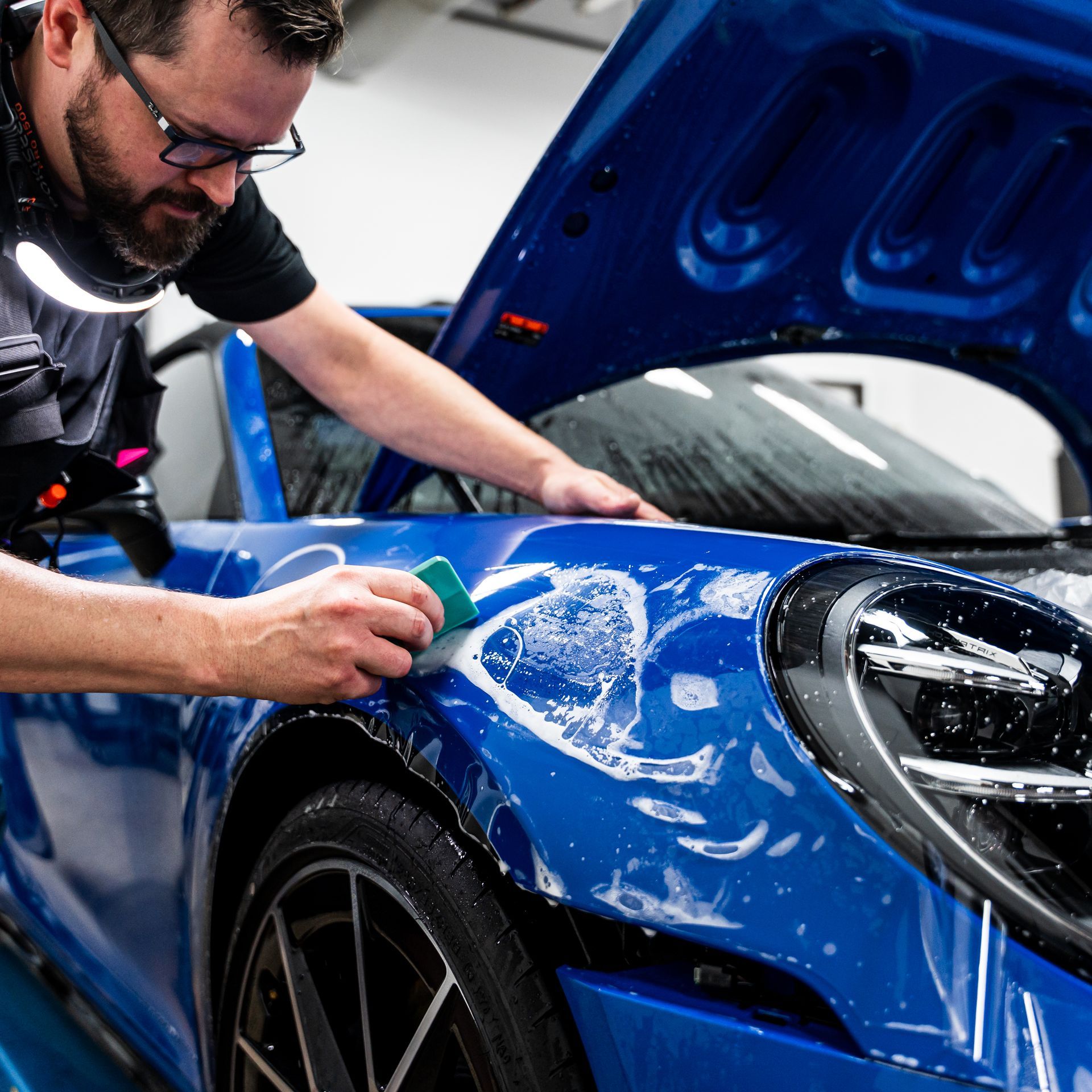
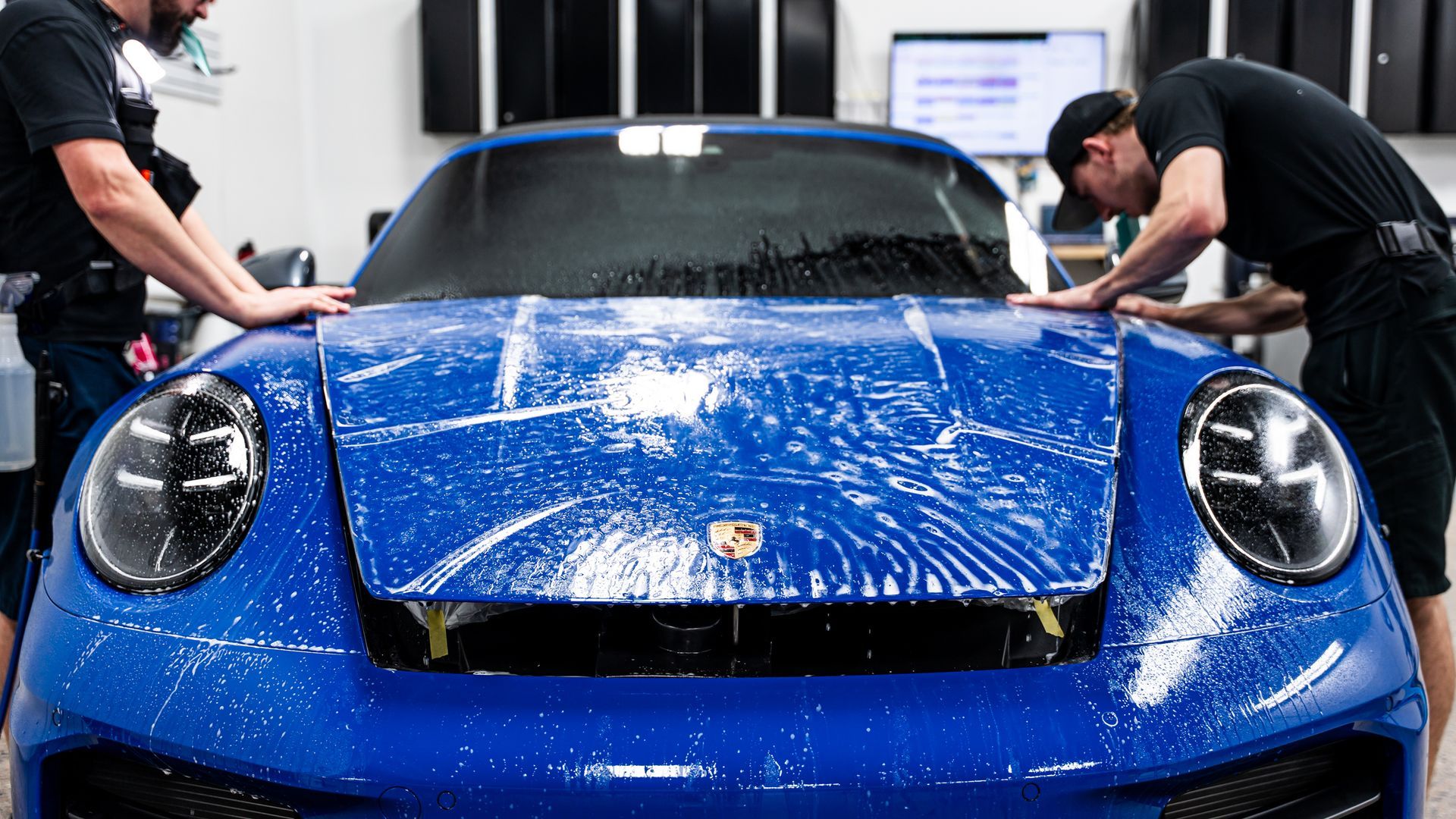
Professional PPF installation is a skilled process that demands proper technique, high-quality materials, and a controlled environment. It is not a job for shortcuts. The process begins with thorough surface preparation. Your vehicle's panels are washed, clayed, and treated with isopropyl alcohol to remove all traces of contamination. Any existing minor paint imperfections may be addressed during this stage to ensure the film bonds to a clean, smooth surface. This preparation is foundational because any debris trapped beneath the film will compromise both the appearance and the adhesion of the finished product.
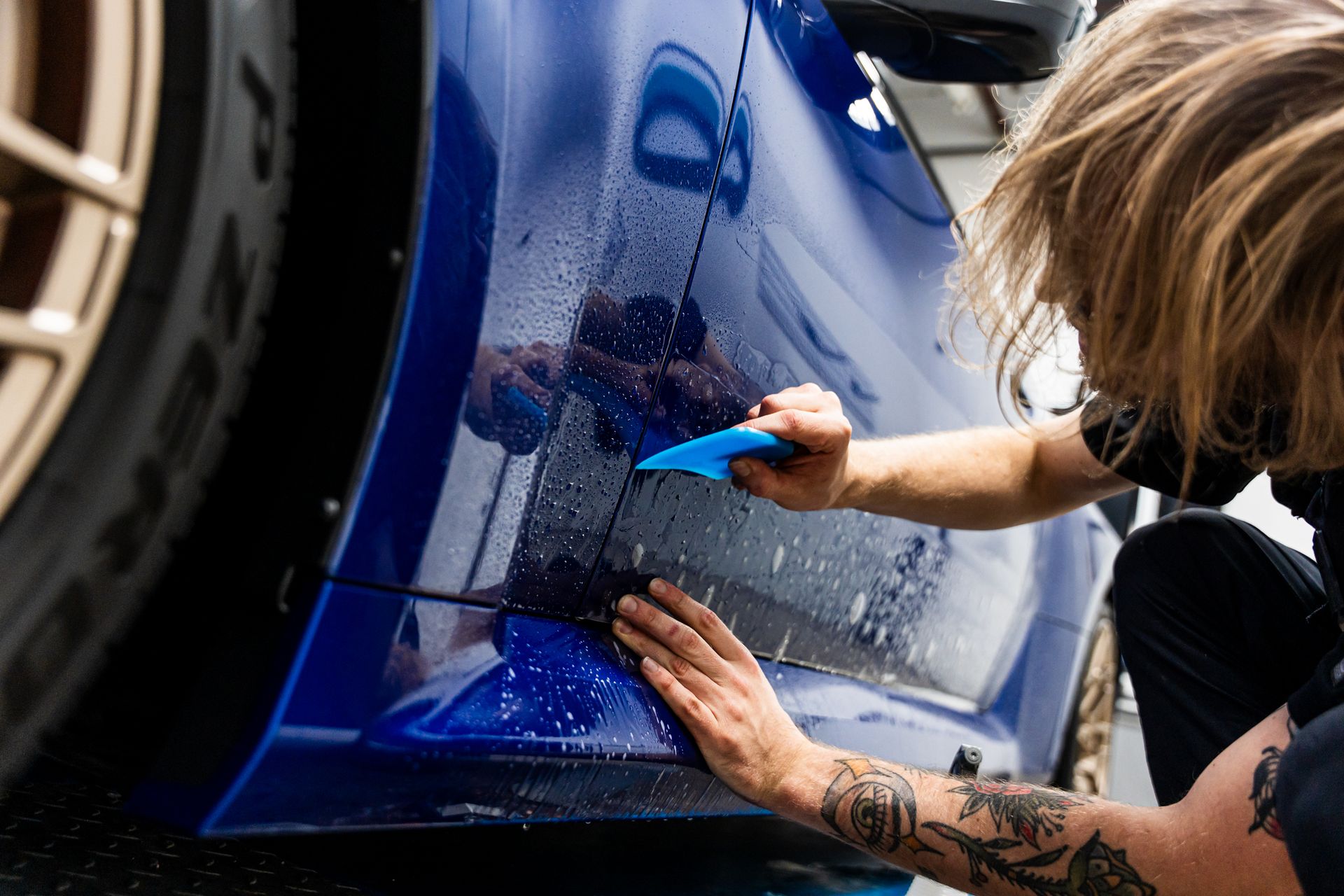
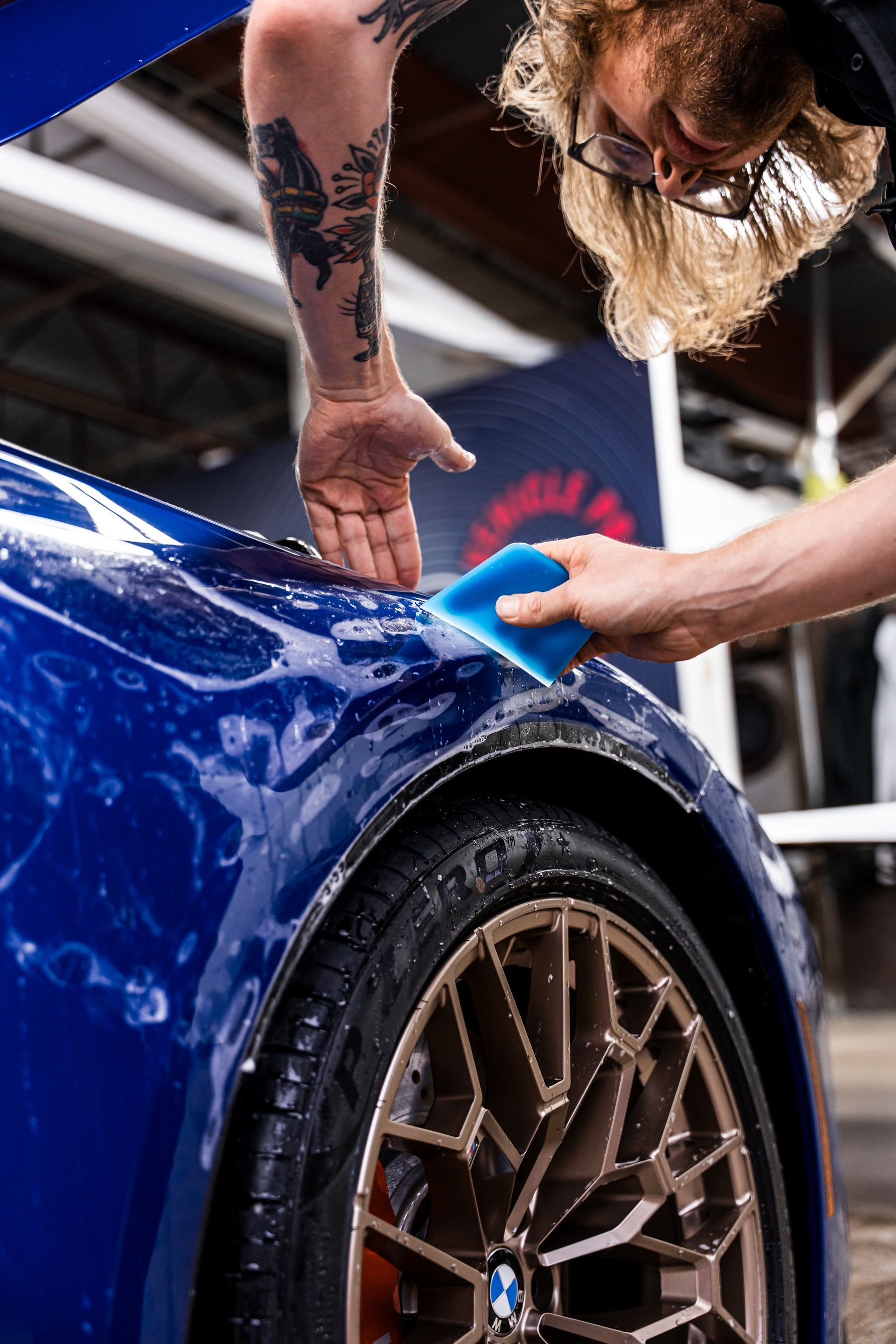
Film cutting is handled with precision using computer-guided software that maps the exact dimensions of each panel on your specific vehicle model. This eliminates guesswork and ensures clean, accurate fits around the complex curves of modern vehicle design, including bumpers, side mirrors, and hood contours. During application, a slip solution is applied to allow the installer to reposition the film as needed before it sets. Soft squeegees and calibrated heat are used to conform the film to curved surfaces and remove any trapped moisture or air. Edges are carefully wrapped and sealed beneath trim to prevent lifting over time. Following installation, your vehicle should remain dry and out of direct sunlight for 24 to 48 hours to allow the adhesive to fully cure. Once set, the film provides years of reliable protection with minimal intervention required on your part.
Caring for Your PPF
Maintaining your paint protection film is straightforward, but a few practices will significantly extend its effectiveness and appearance. Regular washing with a gentle, pH-neutral shampoo is the foundation of proper care. Avoid automatic car washes with abrasive brush systems, as these can cause micro-scratches and may eventually lift film edges. Touchless washes or careful hand washing are the preferred approach.
Periodic inspection of the film's edges and surface is also worthwhile. Catching any early signs of lifting or discoloration allows for timely correction before larger issues develop. Applying a PPF-compatible sealant every few months reinforces the film's hydrophobic properties and keeps the surface performing at its best. When removing stubborn contaminants such as tar or insect residue, use a cleaner specifically formulated for urethane film surfaces and apply it with a soft microfiber cloth. With proper care, a professionally installed,
high-quality PPF can maintain its clarity and protective performance for up to a decade before replacement becomes necessary.
Choosing a Provider
Selecting the right installer matters as much as selecting the right product. PPF is only as effective as the skill and care put into its application. A poorly installed film will lift at the edges, trap contaminants, and may even damage the paint beneath it upon removal. For owners of premium and upper-tier vehicles, this risk is not acceptable.
Look for a provider with a demonstrated track record, transparent communication about products and processes, and a clear warranty on both the film and the installation labor. The right partner will take time to understand your vehicle, your driving habits, and your goals for protection before recommending a coverage plan. Full-vehicle coverage, front-end protection packages, and targeted high-impact zone applications all have their place depending on how and where you drive.
At Denver Auto Shield, conveniently located on the south side of Denver near Englewood, CO, we have been protecting premium vehicles in the area since 2015. We understand what this environment demands, and we build our protection systems accordingly. If you are ready to give your vehicle the long-term protection it deserves, we invite you to
reach out and start the conversation!